
“Runners Welcome, Walkers Tolerated”? Why NIKE Got the Message Completely Wrong
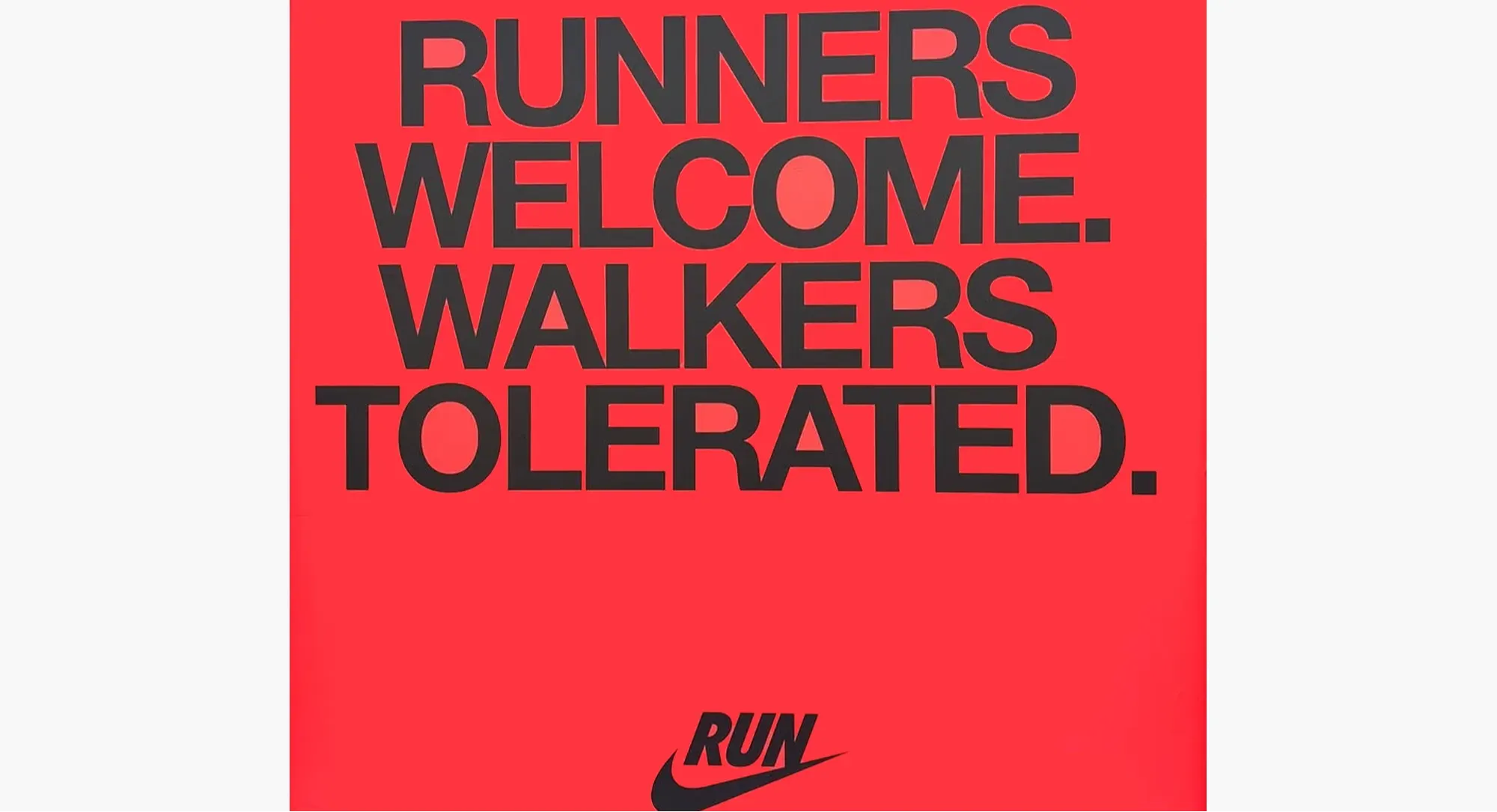
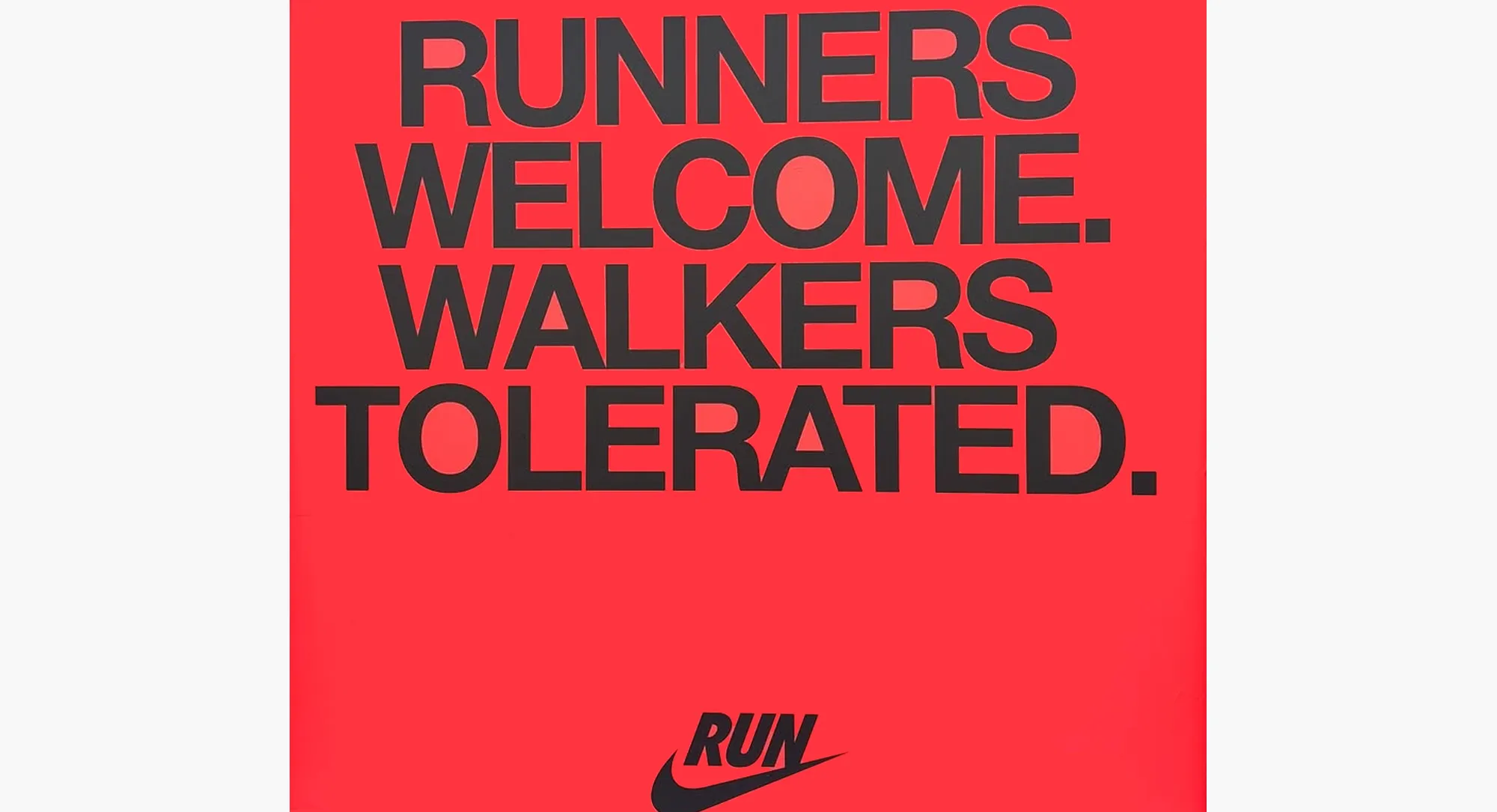
Apr 22, 2026At this week's Boston Marathon, Nike put out a line that quickly made its way across the running world:
“Runners welcome. Walkers tolerated.”
And if I’m being honest, it made me angry. Not mildly annoyed. Not “I disagree but I see the angle.”
Angry because I know exactly what that kind of message does.
It reinforces a standard that tells people: you only belong here if you do it the “right” way.
And for a lot of women, especially the ones already questioning whether they’re “real runners” that message doesn’t motivate.
It pushes them out.
(Nike pulled the ad quickly when the controversy began, but the fact that it was put in in the first place is what angers me)
The Story I Carried for Years
For a long time, I didn’t consider myself an athlete.
I was the kid picked last in gym class. The one trying to disappear when teams were chosen. The one who got out-lapped in track and field and felt the weight of that - not just physically, but internally.
It wasn’t just that I was slower. It was what I made it mean.
That I wasn’t built for this.
That running wasn’t for me.
That “real runners” were something else entirely.
So when I started running as an adult, I didn’t start from neutral. I started with a rule already in place: If I can’t run the whole time, this doesn’t count.
The Rule That Keeps So Many Women Stuck
This is the part that messaging like that Nike line reinforces.
It creates a narrow definition of what a runner is supposed to look like:
Continuous. Fast. Effortless.
And if you fall outside of that, even temporarily, it feels like you’re doing it wrong.
For beginners, that’s often the breaking point. Because running is hard at the start.
Your body is adapting. Your breathing is uneven. Your pacing is off. And if, on top of that, you believe that stopping or walking means failure, the experience becomes discouraging very quickly.
So you stop.
Not because you’re incapable. But because the standard you’re trying to meet leaves no room for the reality of learning.
What Changed Everything for Me
The shift didn’t come from pushing harder or trying to prove something.
It came from doing something I had resisted for a long time:
I started walking.
At first, it felt like I was confirming every doubt I had about myself. Like I was admitting I wasn’t “a real runner.”
But what actually happened was this:
I kept going. I didn’t burn out after a few runs.
I didn’t dread every session.
I didn’t quit the moment it felt hard.
I built consistency.
And over time, that consistency led to progress I never thought was possible, including running two marathons using a run–walk approach.
Not in spite of walking.
Because of it.
Why Run–Walk Works (and Always Has)
There’s a persistent misconception that walking during a run is a fallback.
In practice, it’s a strategy.
Alternating between running and walking helps regulate effort, manage fatigue, and extend endurance. Short walk intervals allow partial recovery, which can improve overall performance across longer sessions.
Some of the benefits are straightforward:
- Better energy management: You delay fatigue by reducing sustained intensity
- Lower injury risk: You decrease repetitive stress, especially when you’re building volume
- Stronger consistency: When something feels doable, you repeat it. And repetition is what builds endurance
- Improved pacing control: Walk breaks prevent the common cycle of starting too fast and crashing
This isn’t about making running easier.
It’s about making it sustainable enough to continue.
The Part That Gets Overlooked
Once I stepped into the running world without that rigid rule, I started noticing something:
A lot of runners walk.
Not just beginners.
Experienced runners. Marathoners. People who understand that endurance is about managing effort. It's not proving something in a single, uninterrupted push.
But that version of running isn’t what gets highlighted.
What gets highlighted is the clean version. The continuous version. The version that looks impressive from the outside.
And that’s how messages like “walkers tolerated” land the way they do.
They reinforce an already narrow picture.
This Is the Conversation That Matters
I’m not interested in debating labels.
I’m interested in what keeps people showing up.
Because I’ve seen the difference it makes when someone lets go of the idea that their run has to look a certain way.
They stop quitting.
They start building evidence that they can follow through.
They begin to trust themselves. That trust goes even beyond running. A self-confidence that they can do hard things and stick to it is built.
That’s the real outcome.
And it doesn’t come from perfection.
It comes from permission.
Redefining What Counts
A run counts if you showed up.
It counts if you slowed down.
It counts if you walked.
It counts if you adjusted halfway through and finished differently than you planned.
It counts because you did it.
Not because it met a specific standard.
A Different Way to Approach Your Next Run
So if you're doubting, remove the rule that it has to be continuous.
Decide this instead:
You’re showing up. You’re allowed to adjust.
That might mean running and walking.
It might mean changing your pace.
It might mean finishing in a way that doesn’t look impressive, but feels repeatable.
That’s not lowering the bar.
That’s how you build consistency.
Final Thought
That line, “runners welcome, walkers tolerated”, might have been written to provoke.
And it did.
For many runners, walking isn’t something to tolerate.
It’s the reason they’re still here.
Runner's Reset:
A weekly Sunday email with simple running tips, motivation, and small actions you can actually fit into a busy life.
Quick read. Easy to implement actions. Actually usable.
Join the Runner's Reset and make running feel simple and sustainable - all at your pace.
By submitting this form, you consent to be contacted via email. This form is for communication purposes only and does not constitute professional advice.
